
Summary
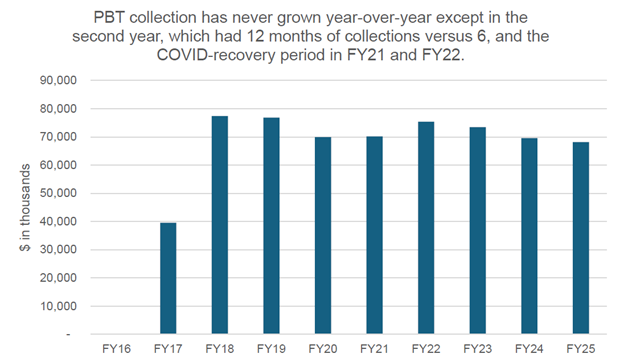
The Philadelphia Beverage Tax was enacted in 2017 to help fund Pre-K, community schools, and capital improvements, with the understanding that it would supplement rather than fully sustain these programs. Collections have declined steadily over time, with a compound annual growth rate of -1.8 percent from FY18 to FY25, reflecting reduced sugary drink consumption and pandemic-related disruptions, and are projected to continue falling at an average rate of -2.1 percent through FY30. While the tax performs as expected and remains relatively stable, its built-in decline means the City will need to rely on other revenue sources to support long-term General Fund spending